

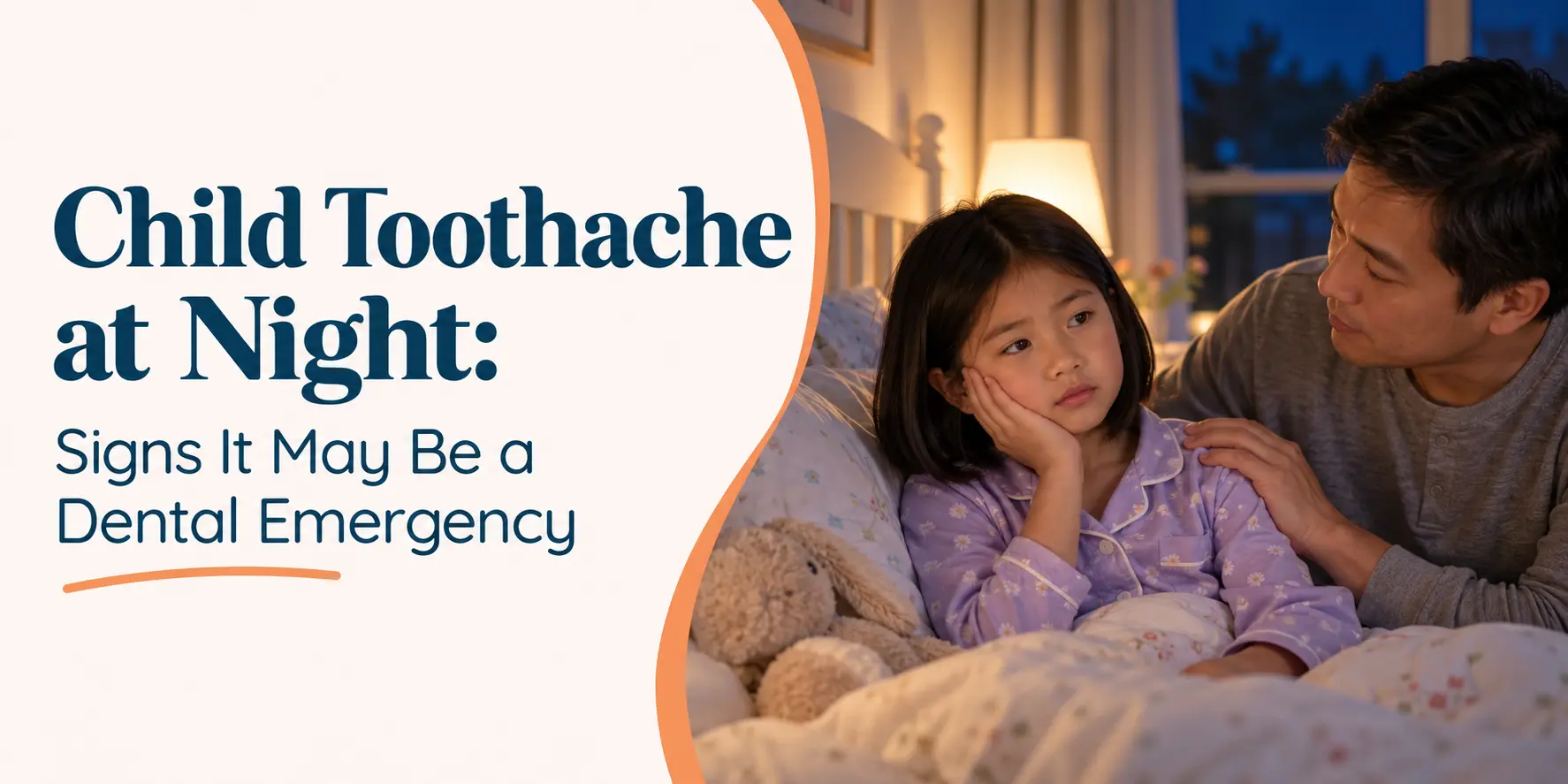
Child Toothache at Night: Signs It May Be a Dental Emergency
A child waking up in the middle of the night with tooth pain can leave parents wondering whether to wait until morning or seek help right away. A child toothache at night can come from something as simple as food caught between teeth, but ongoing or severe pain may point to a cavity, injured tooth, or infection.
Start by checking where your child hurts and whether you can see swelling, redness, or damage. The pain level and other symptoms can help you decide whether your child needs prompt emergency dental care or can be seen during regular dental hours.
Why Does Child Toothache At Night Feel Worse?
A kid’s toothache at night may seem more intense because bedtime removes many of the distractions that keep your child busy during the day. Once the room is quiet, it can be harder to ignore an aching tooth.
Lying down can also make discomfort around a sensitive tooth feel more noticeable. If child tooth pain at night repeatedly interrupts sleep, do not assume bedtime itself is causing the problem. The tooth should be checked to identify what is actually triggering the pain.
What Causes Kids Tooth Pain At Night?
Several dental problems can cause nighttime pain. What matters most is whether the discomfort is brief and mild or keeps returning, getting stronger, or appearing with swelling.
Cavities And Tooth Decay
A cavity may initially cause sensitivity to sweets, cold drinks, or chewing. As the damaged area gets deeper, the tooth can become painful without an obvious trigger. Children with untreated decay may need care for damaged teeth to address the source rather than repeatedly managing the discomfort.
Food And Gum Irritation
Food trapped between two teeth can press against the gums and create surprisingly strong discomfort. Gently brushing and flossing the area may help if trapped food is responsible. Never force floss into a painful or swollen area.
Cracked Or Injured Teeth
A fall, sports accident, or biting something hard can damage a tooth. Look for a chipped edge, bleeding, unusual tooth position, or pain when your child bites. Even a small-looking injury may need a dental evaluation if pain continues.
Tooth Infection And Swelling
Decay or damage can sometimes allow an infection to develop around a tooth. Persistent throbbing pain, swollen gums, facial swelling, fever, or a bad taste in the mouth should not be ignored.
When Is Tooth Pain A Dental Emergency?
Not every toothache in a child requires an after-hours visit. The combination of symptoms is more useful than pain alone when deciding what to do.
Pain That Keeps Waking Your Child
Pain that repeatedly wakes a child, prevents sleep, or becomes difficult to manage deserves prompt attention. Dr. Guo can examine the painful tooth and help parents understand whether decay, injury, or another dental problem is responsible.
Swelling Around The Tooth Or Face
Swelling around the gums, jaw, cheek, or face is an important warning sign. Contact a dentist promptly, especially when swelling is increasing. If swelling affects breathing or swallowing, seek emergency medical care immediately.
Fever Or Feeling Unwell
Tooth pain together with fever, unusual tiredness, or worsening swelling may suggest that the problem extends beyond simple sensitivity. These symptoms require prompt professional guidance.
Trouble Eating Or Opening The Mouth
A child who cannot comfortably chew, open their mouth, drink, or settle to sleep should be assessed promptly, particularly when these problems occur with swelling or severe pain.
What Should Parents Do Tonight?
If your child wakes with tooth pain, focus first on checking the mouth and keeping them comfortable while deciding how urgently they need care.
Gently brush and floss to remove visible food. If your child is old enough to rinse and spit safely, warm water can help clean the mouth. For an injured tooth, a cold compress against the outside of the cheek may help with discomfort.
For temporary pain relief, follow age-appropriate medication directions and guidance from your child’s dentist or healthcare professional. The American Dental Association’s guidance for children’s dental pain explains options used when immediate dental treatment is unavailable. Never place aspirin directly against a child’s tooth or gums.
These steps can make the night easier, but they do not repair a cavity, damaged tooth, or infection.
Can Child Toothache Wait Until Morning?
Mild discomfort may be able to wait until regular dental hours when your child has no swelling, fever, injury, or other concerning symptoms and can eat, drink, and sleep reasonably comfortably.
Seek prompt dental guidance when pain is severe, keeps returning, wakes your child repeatedly, or comes with swelling, fever, or an injured tooth. Dr. Guo can help parents determine the appropriate next step after evaluating the cause rather than relying on pain intensity alone.
What Are Child Dental Abscess Symptoms?
A dental abscess is a pocket of infection that can form near a tooth or gum. For parents, the important point is recognizing warning signs rather than trying to identify the exact problem at home.
Possible child dental abscess symptoms include persistent or throbbing tooth pain, swollen or tender gums, facial swelling, fever, and an unpleasant taste in the mouth. A small bump on the gum near a painful tooth can also be a reason to call the dentist.
Do not squeeze or pop a swollen area. If you suspect an infection, arrange a dental evaluation promptly.
How Can Future Toothaches Be Prevented?
Daily brushing with fluoride toothpaste, regular flossing when teeth touch, balanced eating habits, and routine preventive dental visits can help identify small problems before they become painful.
Parents should also mention sensitivity, chewing discomfort, or occasional tooth pain at dental visits, even when the symptom disappears. Early attention may prevent a minor problem from turning into another sleepless night. Mission Pediatric Dentistry’s children’s dental services can support care based on the specific cause of a child’s discomfort.
Why Choose Mission Pediatric Dentistry?
Mission Pediatric Dentistry helps families understand the cause of children’s tooth pain and the appropriate next step. Dr. Guo evaluates symptoms such as nighttime pain, swelling, sensitivity, and dental injuries so parents can make informed care decisions and children can receive treatment based on their specific dental needs.
Frequently Asked Questions About Child Toothache At Night
Why Does My Child’s Tooth Hurt Only At Night?
Tooth pain can feel stronger at night because children have fewer distractions and may notice the discomfort more while lying quietly. Pain that repeatedly returns at bedtime can still signal decay, irritation, or another tooth problem that needs a dental check.
Is Nighttime Tooth Pain Always A Dental Emergency?
No. Mild tooth pain without swelling, fever, injury, or worsening symptoms may be able to wait until regular dental hours. Severe pain, facial swelling, fever, trouble swallowing, or significant dental injury needs more urgent attention.
How Long Can A Child Have Tooth Pain Before Seeing A Dentist?
Do not wait several days simply because the pain comes and goes. Contact your child’s dentist when tooth pain persists, returns repeatedly, affects eating or sleep, or needs frequent pain relief. Earlier evaluation can identify the cause before symptoms worsen.
Can A Cavity Cause A Child To Wake Up At Night?
Yes. A cavity may begin with sensitivity and later cause stronger or lingering pain as the damaged area becomes deeper. If tooth pain wakes your child from sleep, schedule a dental evaluation rather than relying only on temporary nighttime relief.
What Should I Do For Severe Child Tooth Pain At Night?
Check for swelling, fever, injury, or trouble swallowing. Keep the mouth gently clean and follow appropriate pain-relief guidance for your child’s age. Contact an emergency dentist when pain is severe or warning signs appear instead of waiting for symptoms to worsen.
